
A blown film machine is not only capable of producing different colors of films but is, in fact, one of the most common and efficient methods for manufacturing colored plastic films in large volumes. From the clear stretch wrap on pallets to the black mulch film in agriculture and the vibrant bags in retail, color is a fundamental property tailored during the blown film extrusion process.
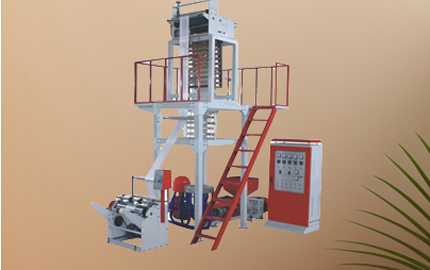
A blown film machine is a type of plastic extrusion system primarily used to manufacture thin, continuous tubes of plastic film. The core process involves melting polymer resin (like polyethylene - PE or polypropylene - PP) and extruding it through a circular die to form a hollow tube. While this tube is still molten, air is blown into its center, inflating it like a balloon into a much larger, thinner bubble. This bubble is then cooled, collapsed, and wound onto rolls as flat film or can be sealed to make bags. Its versatility makes it the dominant process for producing plastic bags, packaging films, agricultural films, and shrink films.
The color in blown film is not achieved by painting but by incorporating colorants directly into the plastic melt before it is formed into a film. There are two primary methods:
1. Masterbatch (or Color Concentrate): This is the most prevalent method. Masterbatch consists of a high concentration of pigment (or dye) dispersed in a carrier resin that is compatible with the base polymer. These small pellets are metered in a precise ratio (typically 1-5%) into the main feed of natural (often white or clear) polymer resin. Inside the extruder, the heat and shear forces homogenize the mixture, evenly distributing the color throughout the melt.
2. Pre-compounded Colored Resin: In this approach, the polymer producer or compounder pre-mixes the colorant with the base resin, creating uniformly colored pellets. The film manufacturer then uses these ready-colored pellets directly in the hopper. This method offers excellent color consistency but is less flexible for quick color changes and requires more inventory.
The specific colorant used (organic pigments, inorganic pigments, or dyes) is chosen based on the required properties, such as color fastness, transparency/opacity, food contact approval, and UV resistance.
Achieving uniform, consistent color in the final film relies heavily on several machine components:
The Extruder and Screw: This is the heart of the system. The screw design must provide sufficient mixing and shear to properly disperse the masterbatch particles and eliminate streaks or "un-melts." A mixing screw or the addition of a static mixer is often employed.
Precise Feeding Systems: For masterbatch, accuracy is key. Gravimetric or volumetric dosing feeders ensure the exact ratio of color concentrate to base resin is maintained, guaranteeing batch-to-batch color consistency.
Screen Pack: A mesh screen pack before the die filters out any unmelted particles or contaminants that could cause defects in the colored film.
Good Process Control: Stable temperature profiles along the extruder barrel and consistent haul-off speed are crucial. Fluctuations can lead to variations in color intensity or optical properties.
A blown film machine is exceptionally well-suited for producing films in a vast spectrum of colors. This is accomplished through the integration of colorants—mainly via masterbatch—into the polymer melt. The key to success lies in the precise combination of raw materials (polymer + colorant) and the machine's ability to mix them homogeneously. Color serves critical functions beyond aesthetics, including product differentiation, UV protection, light blocking for product preservation, and customer branding.
Q1: How quickly can a blown film line switch from producing one color to another?
A: Switching colors requires a purge of the previous material from the system. The time depends on the complexity. A simple change (e.g., from white to black) might take 30-60 minutes of purging with natural resin or a dedicated purge compound. A change from a dark color to a very light one can take significantly longer to avoid contamination.
Q2: Does adding color affect the film's strength or other physical properties?
A: Generally, colorants at low loadings (1-4%) have a minimal impact on core mechanical properties like tensile strength. However, some pigments can affect sealability, and certain organic pigments may influence the film's long-term thermal stability or weathering resistance. The choice of colorant must consider the end-use requirements.
Q3: Can a blown film machine produce transparent colored films?
A: Yes, transparent or tinted films are produced using dyes or specific transparent pigments. The clarity depends on the excellent dispersion of the colorant and the inherent clarity of the base polymer (e.g., LLDPE is clearer than LDPE).
Q4: Is colored film more expensive than clear film?
A: Typically, yes. The additional cost comes from the price of the color masterbatch or compounded resin and the slight adjustments in processing. However, for many applications, the functional or marketing benefits far outweigh the marginal increase in material cost.